
Meta Muse: What the Personal AI Agent Inside WhatsApp Means for Your Business
Meta announced Muse on September 8, 2026 — a personal AI agent that works inside WhatsApp, books, buys and negotiates for its user. What Muse is, how it differs from Meta AI, and how to get your business ready for agent traffic.

Published
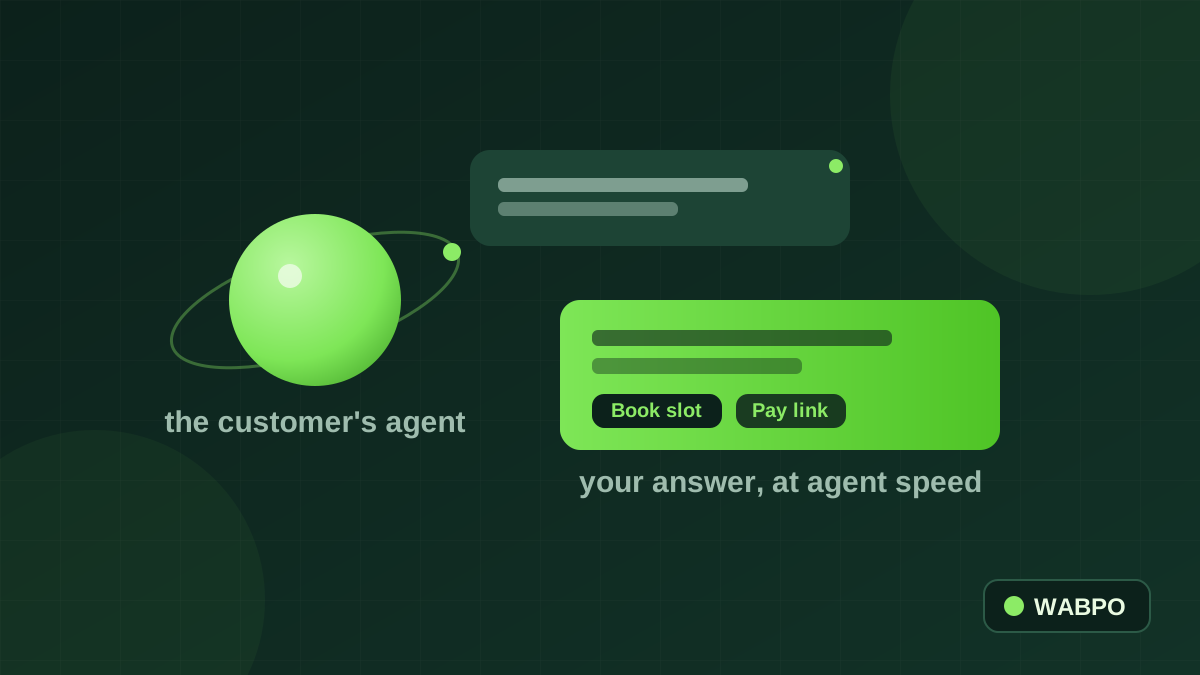
On September 8, 2026, Meta introduced Muse, a personal AI agent — not another chatbot that answers questions, but an agent that acts on its user's behalf: it sends emails, books travel, opens browsers, fills out forms, negotiates, and keeps working after the app is closed. It runs on a dedicated secure virtual machine per user, makes proactive suggestions, and — the line every business should read twice — it works directly inside WhatsApp.
What is Meta Muse?
Per Meta's announcement, Muse is "a secure, private personal AI agent that proactively helps with people's goals and suggests ideas." The concrete pieces:
- It executes, not just chats — sending emails, booking travel, filling forms, negotiating on the user's behalf, and continuing tasks in the background after the app closes.
- It lives where people already are — iOS, Android, the muse.ai website, directly in WhatsApp, and coming to Meta's AI glasses.
- It can pay — integrating Link by Stripe for payments, with Shop Pay support coming.
- It's private by design — each user's agent and data live in a dedicated "Muse Secure VM", a separate Sentinel agent must approve internet-bound actions, and Meta says Muse conversations aren't shared with its ad systems.
- Pricing: free "for most of what people need", with subscription plans above that. Rolling out in the US first, powered by Meta's new Muse Spark model.
Muse works inside WhatsApp — that's the part that changes business messaging
Every earlier wave of WhatsApp AI put an assistant *next to* your conversations. Muse is different in kind: it's an agent that carries out errands, and WhatsApp is one of the places it does them. Play the tape forward on what an errand looks like: "find me a dentist appointment this week", "ask the shop if this jacket comes in medium", "book a table for four on Friday". Each of those ends with a message arriving in some business's WhatsApp inbox — composed by an agent, on a deadline, comparing options.
Muse vs Meta AI vs Meta Business Agent — who's who
Meta now has three AI layers around WhatsApp, and they sit on different sides of the conversation:
| Layer | Works for | What it does | Cost |
|---|---|---|---|
| Muse | The consumer | Personal agent that messages, books and buys on the user's behalf — including inside WhatsApp | Free tier + subscriptions (consumer pays) |
| Meta AI | The consumer | Assistant in Meta's apps for questions, search and creation — doesn't run your business chats | Free |
| Meta Business Agent | The business | Meta's own AI answering on the business side | $2.00 per 1M tokens (~4–5¢/message), no free window |
| Platform automation (e.g. WABPO) | The business | Your workflows, AI replies, team inbox and integrations on the official API | Replies bill as service messages at your market's utility rate |
The consumer side of the table just got an upgrade. The question is whether the business side of your conversations can keep up with it — we compared the business-side options in detail in WhatsApp's built-in AI vs WABPO.
How to get your WhatsApp ready for agent traffic
- Answer instantly, always. An agent doesn't retry tomorrow. Workflows and AI replies that resolve product, price and availability questions around the clock are the minimum bar.
- Be structured, not chatty. Agents parse buttons, lists and clear prices far better than five fragments of typing. One complete answer — price, options, next step — serves humans and agents alike.
- Make yourself bookable. Muse books things. A Google Calendar booking step in your workflow means an agent can complete "get me an appointment" without a human ever picking up.
- Close with a payment link. Muse integrates Stripe Link and Shop Pay; in Pakistan, AsaanBill pay-by-link puts the equivalent inside the chat. A conversation that can end in payment is a conversation an agent can finish.
- Keep the human exit. Agents escalate edge cases to their humans; your side needs the same — a shared team inbox with handover, so the tricky 10% lands with a person.
- Watch your costs. More agent traffic means more conversations and more replies — and from October 1, 2026, replies are billed. Efficient flows matter twice now: here's the flow-by-flow playbook.
Frequently asked questions
What is Meta Muse?
Muse is Meta's personal AI agent, announced September 8, 2026. Unlike a chatbot, it acts on its user's behalf — sending emails, booking travel, filling forms, negotiating and making payments — and keeps working in the background. It runs on a dedicated secure VM per user, with a separate Sentinel agent approving internet-bound actions.
Does Muse work in WhatsApp?
Yes. Meta's announcement lists WhatsApp as a place Muse works directly, alongside iOS and Android apps and the muse.ai website, with Meta's AI glasses coming later.
Is Meta Muse free?
Meta says Muse is free "for most of what people need", with subscription plans for people who want more. It is rolling out in the US first.
How is Muse different from Meta AI in WhatsApp?
Meta AI is an assistant you ask questions. Muse is an agent that executes tasks for its user — including messaging businesses, booking appointments and completing purchases. Neither runs your business's side of the conversation; that's what business-side automation platforms do.
What should businesses do about AI agents like Muse?
Prepare for conversations initiated by software: automate instant answers, use structured messages (buttons, lists, clear prices), make appointments bookable in chat, offer pay-by-link, and keep human handover for edge cases. Agents recommend whoever completes the task fastest.
Written by
Saifullah AlamFounder — Spadasoft, WABPO & WAWCD
Saifullah Alam is the founder of Spadasoft, WABPO and WAWCD. He builds WhatsApp Business API products that companies use for campaigns, chatbots and customer support — and writes practical, no-hype guides about WhatsApp marketing based on what actually ships.
Keep reading
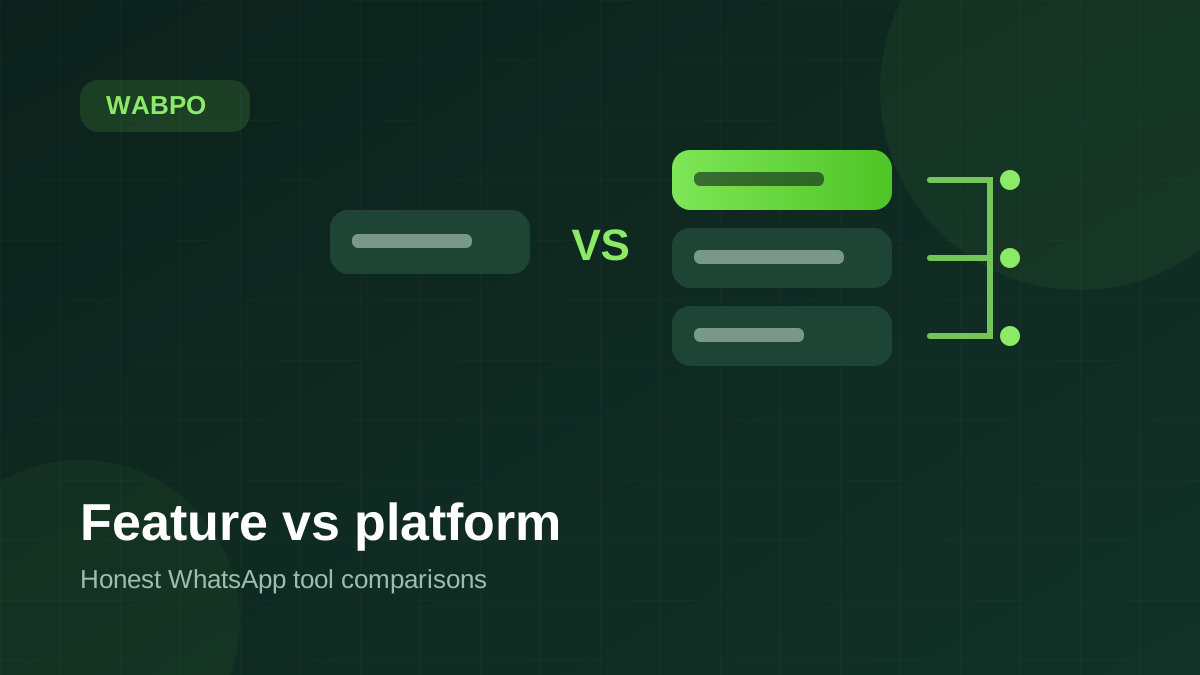
WhatsApp's Built-In AI and Paid Broadcasts vs WABPO: What Meta's New Features Actually Cover
Meta building AI replies and paid broadcasts into WhatsApp is good news — and it doesn't replace automation platforms. A feature answers a message; a platform runs the process.
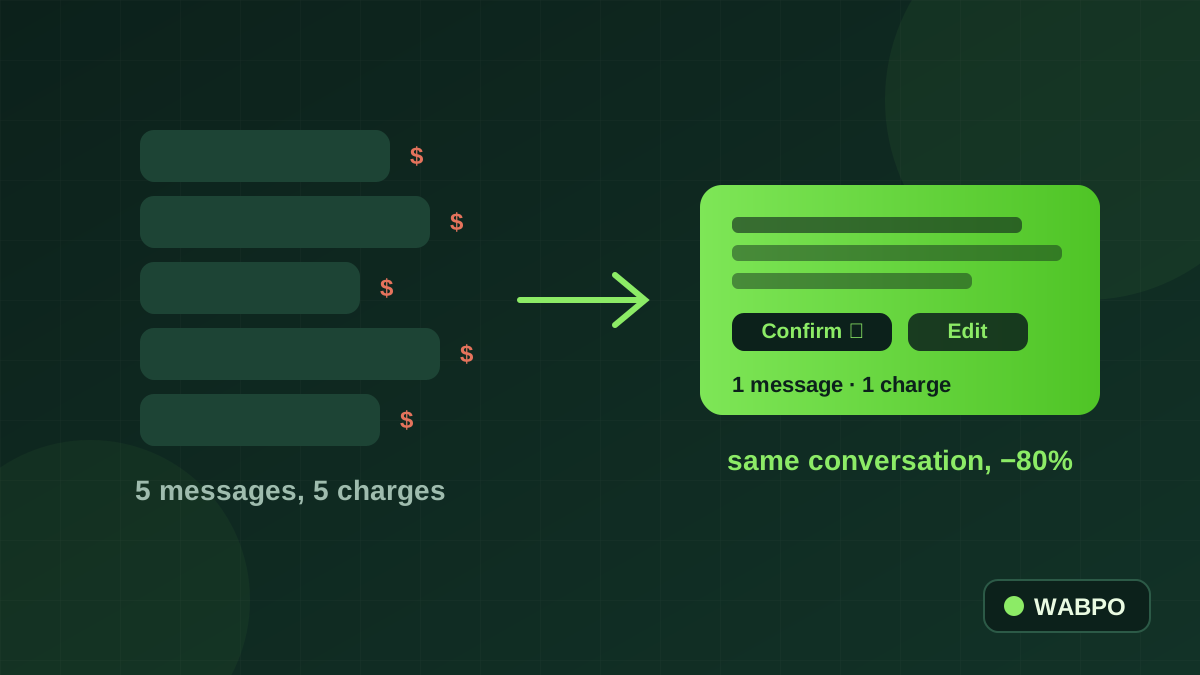
How to Cut WhatsApp Workflow Costs Before October 2026: A Flow-by-Flow Playbook
Chatbot flows built in the free era love sending bursts of small messages — greeting, menu, 'please choose', confirmation, another menu. From October 1, 2026, each of those is a billable event. This is the flow-by-flow playbook for cutting the count without cutting the experience — and where to get our engineers' eyes on your flows.
How to Create a WhatsApp Chatbot Without Coding (5 Steps)
A chatbot answers your customers at 3 am, takes orders and never forgets a step. Here's how to build one on WhatsApp without writing a line of code.